Nox Metals quotes a saw-cut aluminum block in seconds and, by its lead investor’s count, delivers it in an average of 36 hours, in a trade where the quote alone has taken three to five days. The company is fourteen months old. It launched out of Y Combinator’s Summer 2025 batch, closed an $11.5 million seed on 14 June 2026 led by Hyperion with Palmer Luckey, Jared Friedman, RoboStrategy, Operator Collective, DTX and Alumni Ventures alongside Y Combinator, and is moving into a 30,000 square foot Second World War factory in Ferndale, Michigan, north of Detroit. Its founder, Zane Hengsperger, is 26, grew up on the floor of his father’s shop, and describes what he has built as “a software company wrapped around a saw”. This piece covers the turnaround Nox Metals publishes against the service centers it competes with, the product range and the machine behind it, the $14 billion incumbent’s market it is entering, the tariff-driven metal price that no supplier controls, the twelve months from Demo Day to hundreds of customers, and behind the wall, the landed-cost worksheet and certificate checklist for a first order.
Six suppliers, two ways of quoting. Nox Metals, Cut2Size Metals and Industrial Metal Service quote online. Reliance, with about 310 locations, delivers about 40% of orders within 24 hours, Alro states a next-day capability, and the typical service center as Nox’s backers describe it takes 3 to 5 days to quote and 3 to 5 days to deliver. The Lead-Time Monitor has tracked switchgear and transformer lead times since launch. Cut plate is the first raw material it lists, because Nox made the number public.
Nox Metals Started on a Shop Floor in Windsor
Zane Hengsperger is from Windsor, Ontario, across the river from Detroit, and grew up in his father’s shop, where metal arrived late and was priced by phone. He graduated from the University of Michigan in 2022 and, before Nox, ran a 30-person fabrication facility. The idea came from the buying side of that job. On the MakingChips podcast in February 2026 he put it as a diagnosis: the bottleneck in American manufacturing is not machining, it is metal supply. Machine shops that are, in his words to SendCutSend’s podcast, “too small to get white glove treatment from traditional service centers but too important to keep waiting” spend days getting a price on a block of 6061 they could cut in an hour.
He wrote about the idea online, and Y Combinator funded the company within 24 hours of reaching out, with a flight to San Francisco. Nox launched in the Summer 2025 batch in August 2025 as “fully automated factories that cut and ship metal fast”. The founding team sold during the day, wrote software, and cut metal in the evening. Hengsperger chose Detroit for the reason a metals company should: the machinists, riggers and saw operators are still there, and so are the buildings. By the end of 2025 he was on Forbes’ 30 Under 30 list for Manufacturing and Industry.
The stated mission is to supply every factory in America in under 24 hours at a fair, transparent price, and by March 2026 the measured average was 36 hours. That figure comes from Behind Genius Ventures, which led the pre-seed and wrote up the company on 2 March 2026 against what it calls an industry standard of 4 to 5 days. It is an investor’s number, not yet a published monthly statistic, and it is the number a buyer should hold the company to, in the way the OEM Disclosure Scorecard holds Schneider to its published lead-time guide. Few suppliers of any age have said what their average is.
A Software Company Wrapped Around a Saw
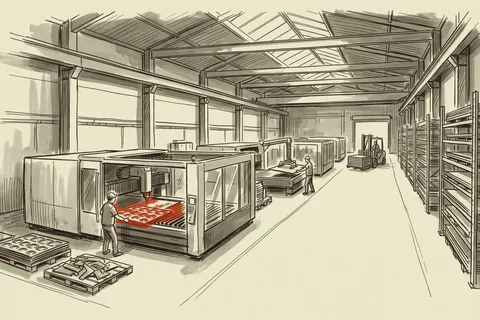
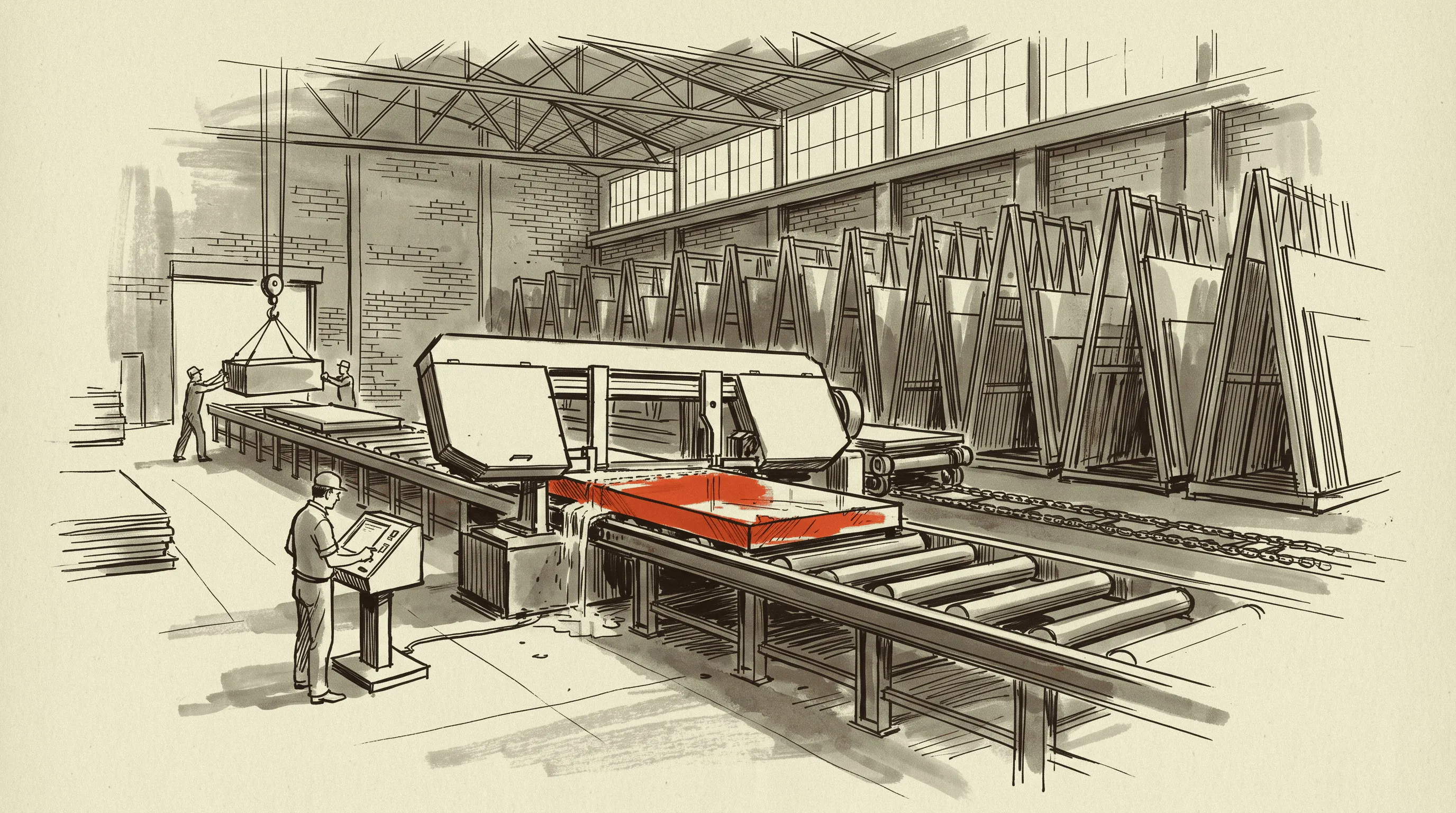
The saw is a Kasto BBS block band saw that takes a plate of up to 50,000 pounds. The software around it has names. WAYNE is the nesting and optimization engine, which the company and its investors say evaluates “thousands to millions of possible cut layouts per plate in 30 seconds” and batches several customers’ orders onto one plate so the remnant is smaller. GONDOR, later described as NOX NEST, is the customer portal: instant algorithmic pricing on an uploaded cut list, material lists parsed by the software, automated work orders, order tracking, and self-service delivery of material certificates. The plant is ISO 9001:2015 certified.
Plate in 5000 series, 6061, 7050 and 7075 from 0.25 to 24.5 inches thick, in T651, T7351 and T7451 tempers, saw-cut to length and width and faced flat on request. Round bar in 6061 and 7075 from 0.5 to 17 inches in diameter, flat bar from 0.25 to 4 inches, cut to length with square ends. Inconel and stainless on request. That is the range a job shop machining aerospace brackets, tooling plates, fixtures or medical housings actually buys, and it is the range Hengsperger narrowed to on purpose after early struggles getting access to domestic mills taught him to go deep on aluminum plate first.
The team is 35 people as of the Y Combinator profile, built deliberately as industry veterans beside software talent. The chief operating officer, Vince Mazzei, spent 21 years at Alro Steel, the $2.85 billion Jackson, Michigan distributor. The chief revenue officer, Kelly Gibb, has 15 years selling to the same machine shops. The founding engineer, Inan Syed, built WAYNE, and the company drew more than 500 engineering applicants in its first year. The mix matters because the trade Nox is entering has, by Operator Collective’s count, fewer than 40 software engineers across the entire US sector.
The Service Center Market Nox Metals Is Entering
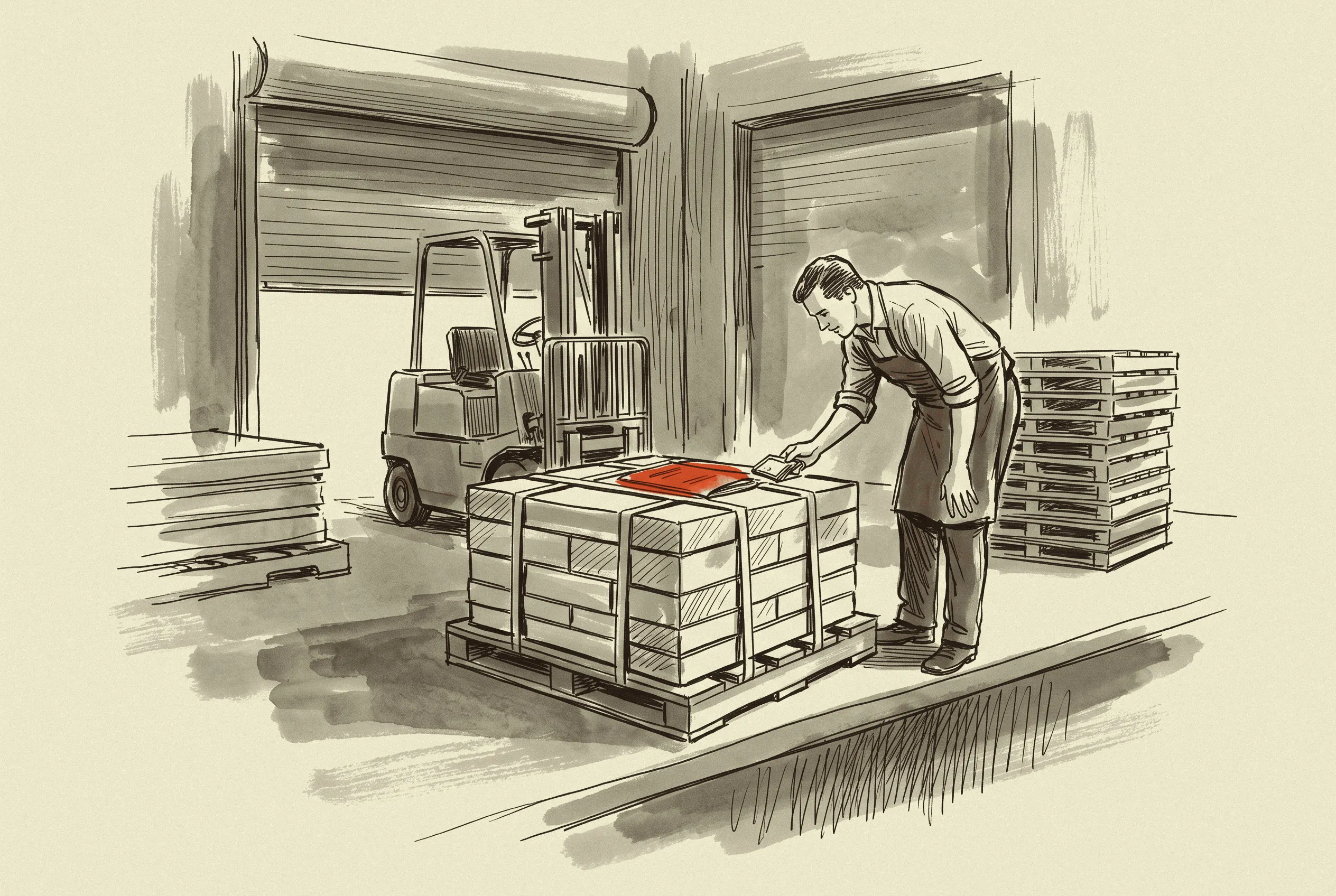
Metal service centers are the layer between the mill and the machine shop. They buy plate and bar by the truckload, hold it, cut it, and sell it in pieces. In the United States the layer is large and old. Reliance, the biggest, says in its 10-K for 2025 that it sold 6.4 million tons from about 310 locations in 41 states, about 17% of everything US service centers sold, to more than 125,000 customers on an average order of $3,120, and that it delivered about 40% of orders within 24 hours. Ryerson, founded in Chicago in 1842, shipped 1.95 million tons at $2,348 a ton in 2025. Alro Steel, privately held in Jackson, Michigan, had 2024 revenue of $2.85 billion across 74 locations and 6.3 million square feet in Metal Center News’ Top 50.
Reliance at $14.29 billion and 310 locations, Ryerson at 1.95 million tons, Alro at $2.85 billion and 74 locations, and then the rest of the trade: Behind Genius puts the average service center at one location, 24 employees and about $47 million a year, and the sector at more than $200 billion. Nox is one building, 30,000 square feet and 35 people. The comparison is the point rather than the problem. Most of the companies Nox sells to are also one building and 24 people, and they have been buying from a supplier shaped exactly like themselves, by phone, for eighty years.
The opening Nox Metals found is that a service center’s product is not metal, it is the four days between the request and the truck, and software collapses four days more cheaply than a fifth saw does. Reliance’s 40% within 24 hours is achieved with 310 stocking points and $14 billion of turnover. Nox’s 36-hour average is achieved with one plant and a nesting engine, which is a different cost structure for the same promise. The nearest analogue is SendCutSend, which published a 2 to 4 day processing time for laser-cut sheet in 2018, shipped 30 million parts, and raised $110 million at a $1 billion valuation this May. Hengsperger has been on SendCutSend’s podcast, and the two companies sell to the same shops: one the sheet, the other the block.
Who Buys From Nox Metals
The customer list the company describes is the American job shop and the OEMs above it. Daily Detroit quoted Hengsperger on where the first year’s metal went: “Our metal has gone to space. It has protected our troops. It is in your car and in the machine that scanned your chest.” Aerospace, defense, automotive tooling and medical imaging are the four sectors named in the seed announcement, and SpaceX is the one customer named in public. The rest are the 16,619 machine shop businesses IBISWorld counts in 2026 and the 265,030 people BLS counts working in them, most of them in shops with one building and a handful of spindles.
For that shop the block is the start of every job. A $130,000 Haas VF-2 machining a fixture plate earns nothing while the 6061 is on a truck, and the machine-tool record we wrote in May showed the average new machine getting dearer as unit counts fell, which makes idle spindle-hours more expensive every year. Reliance’s own average order is $3,120, which is a few blocks and a bar, and the arithmetic of a service center is thousands of those a day. The Bid-Tab Price Book has no raw-material band yet, which is why the readers’ log matters. Nox’s bet is that the shop placing the $3,120 order would rather place it on a web page at nine in the evening than on a phone at nine the next morning, and that the saw can be scheduled by software the moment the order lands.
The published range fits that buyer. Plate to 24.5 inches covers tooling blocks, fixture bases and the thick aerospace hog-outs that are most of a 7075 buyer’s spend, and bar to 17 inches covers the turned parts. What the range does not yet include, steel and stainless plate as stocked items, is the part of the order the incumbent keeps for now, and the paid section below says how to split it. A shop with a used machine bought at auction and a two-week backlog gains the most from a 36-hour supplier, because it has the least float in its schedule, and the Lead-Time Schedule turns a supplier’s promise into the calendar that shows it.
What the Metal Costs Before Nox Touches It
Three layers of an aluminum block’s price are set before any service center cuts it, and a buyer comparing Nox to an incumbent should hold them constant. The first is the LME cash price. The second is the US Midwest premium, the delivered-to-Midwest surcharge over LME that every domestic supplier pays. It went from the high 50s in cents per pound in early June 2025 to 90.30 cents on 15 December 2025, about 93 cents by 6 January 2026, and $2,182 a tonne, 99 cents a pound, by 25 February 2026 as reported by Wedbush. The third is the reason for the second: Section 232 aluminum duty at 50% since 4 June 2025, extended by Proclamation 11021 on 2 April 2026 to the full customs value of derivative articles. The September 2026 tariff schedule has the rate table, and the Tariff Exposure Calculator applies it to a bill of materials.
High 50s in June 2025, 90.3 cents in December, 93 in January, 99 in February. A 12 x 12 x 2 inch block of 6061 weighs about 28 pounds, so the premium alone moved its raw-metal cost by about $11 in nine months before any mill or service-center margin. ISM’s August 2026 survey listed aluminum as up in price for the 33rd consecutive month, the longest run in the table we read in the 171-day capex piece. The Copper and Wire Price Sheet shows the same mechanism on the copper side each week.
What Nox controls sits on top of that tape, and it is two things. The first is yield. Its investors say traditional service centers lose 30 to 40% of a plate to scrap, and the whole purpose of nesting several customers’ blocks onto one plate is to sell more of the plate as product and less as remnant. The company’s site shows its yield figure live. The second is the days, and days are money to a shop whose $130,000 Haas VF-2 is waiting for stock. A buyer who wants to see the two effects separately should put the same cut list through Nox and the incumbent in the same hour and log delivered dollars per pound and calendar days to the dock in the Equipment Price Benchmark, which takes raw-material orders as well as machines.

From Demo Day to Hundreds of Factories in Twelve Months
The pre-seed closed on 23 September 2025 at Demo Day. Its lead, Behind Genius, reports $5.3 million from 8090 Industrials, Y Combinator, E1, The Council, Anorak and itself. TBPN Digest and Dealroom report $4.6 million for the same round, so we print both. The seed nine months later was $11.5 million led by Hyperion, the New York firm, with Palmer Luckey of Anduril, Y Combinator’s Jared Friedman, RoboStrategy, Operator Collective, Dallas’s DTX Ventures and Alumni Ventures. The capital is for technology, machinery and production capacity at the Detroit plant.
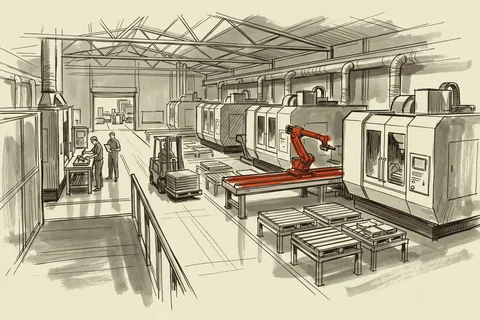
$5.3 million in September 2025, $11.5 million in June 2026, $16.8 million in total, or $16.1 million on the lower pre-seed figure. What the money bought in between is the more useful record. By 2 March 2026 the company had shipped more than 100 truckloads from its first Detroit floor, a 1920s complex in Mexicantown with a motorized saw platform, a chain conveyor for the blocks, coolant, and a chip-recycling loop. By 14 June it was shipping to “hundreds of American factories” in aerospace, defense, automotive and medical equipment. SpaceX found the company through social media and became a customer, and the MakingChips episode tells the story of an order for a block of more than 18,000 pounds.
Eight dated steps from the August 2025 launch to the planned Los Angeles plant in early 2027, with the 30,000 square foot Ferndale building at 1350 Jarvis Street coming online in summer 2026. Hengsperger’s own summary, on X in October 2025, was that “everyone else is accepting metal prices and speed”. The Factory Automation Roadmap lists the Los Angeles opening as a date to watch, because a second plant is when a one-building supplier becomes a network, and the Lead-Time Schedule is where a second published turnaround would land.
How to Place a First Order With Nox Metals
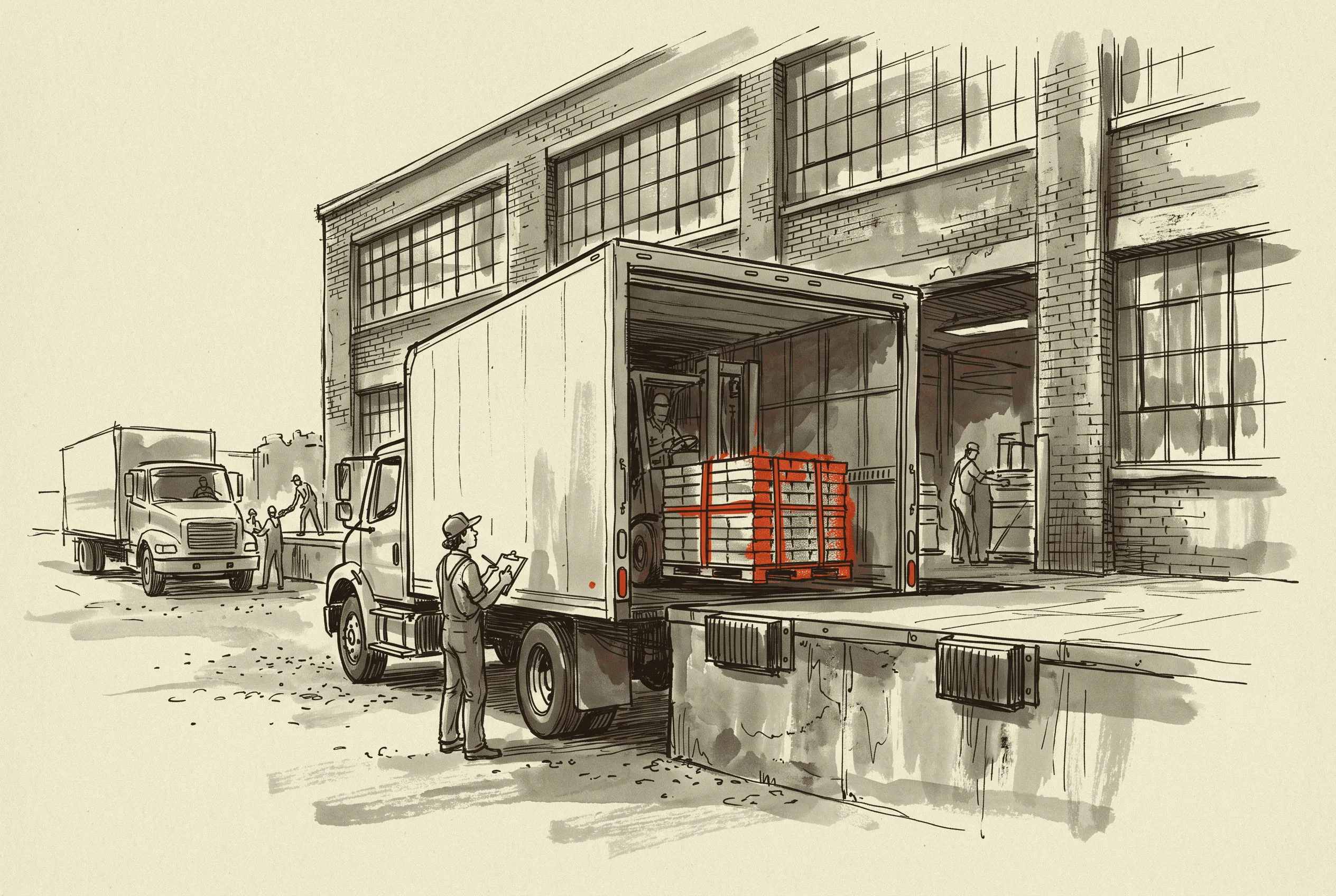
Start with the block you buy most. Take the 6061-T651 plate order that comes up every month, export the cut list, and put it through the instant quote at noxmetals.co and through the incumbent’s rep in the same hour. Record three numbers: minutes to a price, delivered dollars per pound, and calendar days from order to dock. The alloys, tempers and size ranges in the product table above are the ones to test, and 7075-T651 plate, the alloy that gets scarce first in a defense cycle, is the one to test second.
Ask for the certificate with the order rather than after it. Nox’s portal delivers mill certificates self-service, so request the ASTM B209 cert with heat number on the first shipment and confirm it matches the plate. If any of the work touches DFARS 252.225-7009 specialty-metals clauses, or the 10% Section 232 tier for goods made from US-melted metal, ask where the plate was melted. The RFQ template has the certificate language, and Quote Check reads any supplier’s quote against a published schedule.
Then decide what to move. A shop that buys $3,120 of plate a week, Reliance’s average order, can move that order to Nox on the first week the delivered price and the 36 hours both hold, keep the incumbent account open, and let the log in the Equipment Price Benchmark decide the split over a quarter. That is the same test we set for every new supplier in this market, and Nox is the first cut-plate supplier young enough and public enough to be tested in a spreadsheet.
Behind the paywall: the landed-cost worksheet for a 28-pound block from LME to dock, the six certificate and clause items for a seed-stage supplier, when to split the order rather than switch it, and what the Los Angeles plant changes for West Coast shops. The turnaround rows for all six suppliers sit in the Lead-Time Monitor, and the delivered prices readers log go to the Equipment Price Benchmark.