Three companies are building the autonomous American factory from three directions, and between July 2025 and August 2026 they raised $1.41 billion to do it. 1872 took $15 million to run robotic steel fabrication out of a 1903 building in Cincinnati. Foundational Industries took $25 million to build a rack-enclosure plant that already runs in software. Hadrian added $1.37 billion on top of four operating plants totalling just under 3 million square feet. One is a steel shop, one is a datacenter supplier, one is a defense industrial base in its own right. They share a bet: that a factory run by software, with people trained in weeks rather than years, can quote in days and deliver in weeks where the incumbent quotes in weeks and delivers in months. This piece covers the three founding teams and their machines, the welding gap that makes 1872 possible, the emulated factory Foundational will pour concrete for by December, Hadrian’s jump from 600,000 to 3 million square feet, the Cherokee submarine plant and its $35.24-an-hour jobs, what a buyer can order from each today, and behind the wall, the questions to put to each before the purchase order.
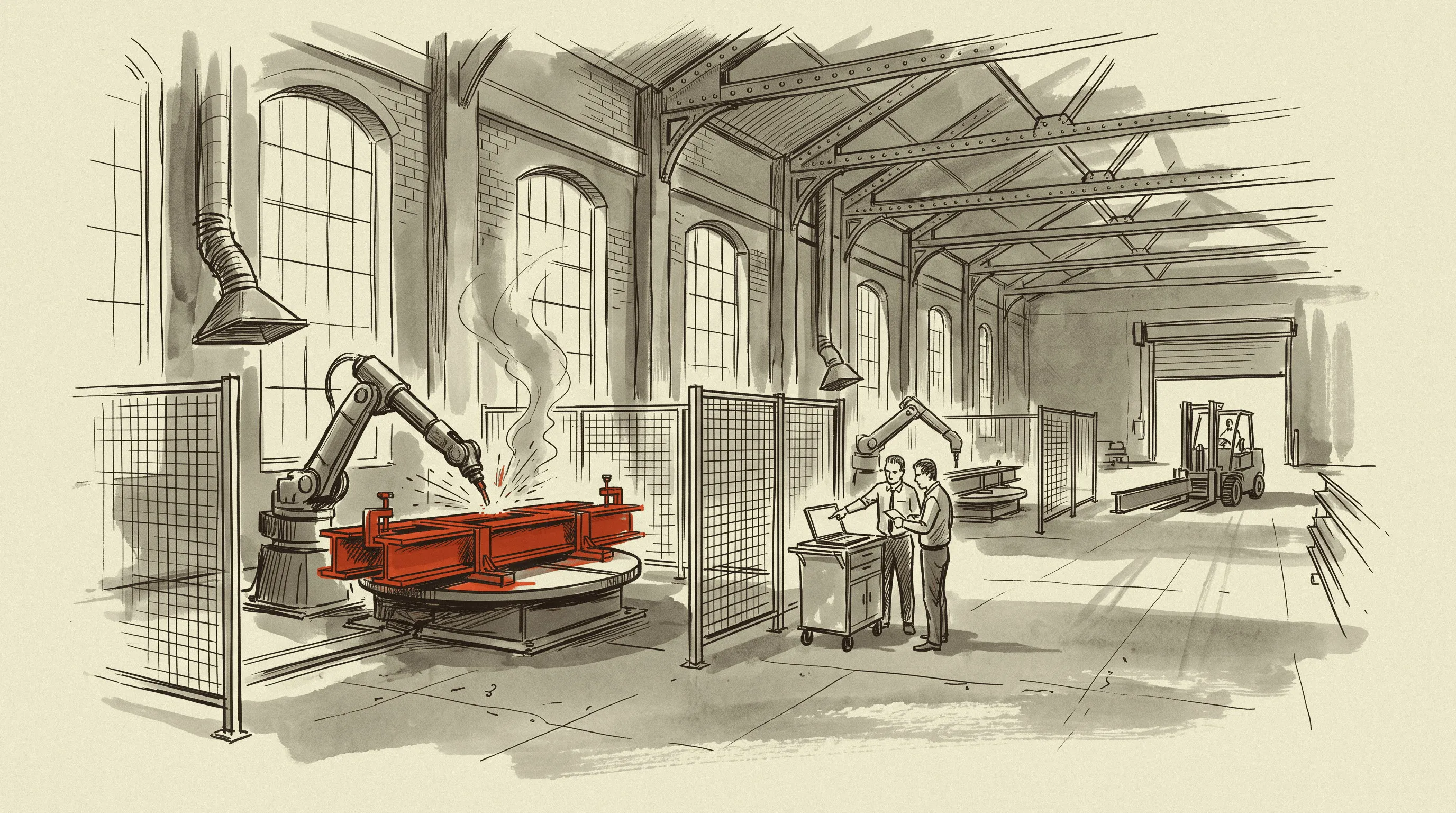
Five plants across three companies, two of them producing today, one operational since early 2026, one opened on 20 March 2026 with full-rate production promised inside 24 months, and one to be sited and opened by the end of 2026. The Lead-Time Monitor will add a delivered-lead-time row for each as the first public orders ship.
Three Blueprints, One Idea
The idea is the same one that took Nox Metals from a Y Combinator batch to a Ferndale plate saw and SendCutSend from a Reno garage to a billion-dollar valuation: put the software in front of the machine, so the quote, the schedule and the material plan are computed rather than phoned. 1872’s version is called Factory OS. Foundational’s is a “common intelligence layer” that every work cell reports to. Hadrian’s is Opus, which the company describes as an AI platform for factory autonomy that reads legacy designs and automates machining and inspection. The three differ in what comes out the door, and in scale by two orders of magnitude, but a buyer can read them with one checklist: what is the product, where is the building, how many people does it take, and when does the first delivery date land.
The money tells you how far along each is. 1872’s $15 million is one of the largest seed rounds in Ohio history and pays for production at one plant. Foundational’s $25 million is, per Fortune, meant to prove the model at one facility rather than fund a network. Hadrian’s $1.37 billion Series D, co-led by WCM Investment Management, Washington Harbour Partners, Valor Equity Partners, 137 Ventures and Baillie Gifford with JPMorgan Chase’s Strategic Investment Group as anchor, funds new factories, production lines and R&D for a company that already runs four. The Factory Automation Roadmap puts all three on the same 2026 to 2028 calendar as the robot cells and machine tools a shop buys today.
1872: Launch-Grade Operations in a 1903 Cincinnati Plant
The name is the year Andrew Carnegie built his first steel mill, and the founders come from the company that made “launch-grade” a manufacturing adjective. Dan Summers, the chief executive, led Raptor engine integration and test engineering at SpaceX. Michael Grant, the chief technology officer, built flight-software infrastructure for Starship. Brian Mongilio, head of operations, ran Merlin engine production. On 22 July 2026 they announced a $15 million seed led by private funds advised by The O.H.I.O. Fund and opened for production in the 1903 David Hummel Building Company plant on Spring Grove Avenue in Camp Washington, a building put up by the masonry firm that built Cincinnati City Hall and Union Terminal.
What they make is heavy steel fabrication for energy, utility, industrial and modular-construction customers: the weldments, frames and structural assemblies that today come from job shops with a six-month backlog, and whose imported alternatives now attract the Section 232 steel duty the Tariff Exposure Calculator applies at full customs value. Factory OS, their own software, ingests a 3D design, plans material and logistics, schedules machines and coordinates the welding robots, and also runs purchasing, estimating and shipping, so the whole order from drawing to truck sits in one system. Early automations are already running. The company targets full autonomy in 2027. Summers’s stated goal is a plant where “our software orchestrating robotics” delivers “a faster, more efficient, and safer fabrication process”, and the claim on lead time is specific: from months or longer to weeks.
1872’s arithmetic is a $350 billion fabricated-metal market served by shops that cannot hire, and its answer is to make the weld with a robot that has already seen tens of millions of inches of it. The company chose Ohio for the labor pipeline and the engineering programs at the University of Cincinnati and Ohio State, and for the robot supplier ninety minutes up I-71. The Camp Washington plant is the prototype. The release calls it the model to validate before scaling to further sectors. A buyer of structural weldments should read that as a plant with capacity to sell in 2026 and 2027, and one worth a first order sized to learn from. We priced a conventional cobot MIG cell at $113,336 in the robot cell piece, and the difference between that and 1872 is that the buyer does not have to own it. The Bid-Tab Price Book has the public-award prices for fabricated steel that a first 1872 quote can be read against.
Path Robotics, Obsidian and the 330,000-Welder Gap
The robots come from Path Robotics in Columbus, and the model inside them is Obsidian, which Path announced on 8 September 2025 as the first purpose-built foundational AI model for welding, trained on tens of millions of welded inches. Path’s founder and chief executive Andy Lonsberry put the case plainly at 1872’s launch: welding remains one of manufacturing’s most difficult processes to automate, because every fit-up is a little different and a fixed program cannot see the gap. Obsidian is built to see it. In April 2026 Path put the same model on a Boston Dynamics quadruped and called it Rove, with Saronic among the first shipbuilders to evaluate it, which tells a buyer where this technology is headed: off the fixed cell and into the hull.
82,500 a year for four years is 330,000 by 2028 on the American Welding Society’s projection as The Fabricator reports it. Path’s own release cites 320,500 by 2029 and says 80% of welding is still done by hand. The two figures differ by a year and a rounding, and both say the same thing: the constraint on American steel fabrication is not steel and not machines, it is people holding torches. Every weld a robot makes at Camp Washington is a weld that did not need one of the 82,500. The Lead-Time Schedule tool has the current quoted weeks for fabricated steel from conventional shops, which is the number 1872’s “weeks” is measured against.
Foundational Industries: A Factory Written in Software First
Jonathan Winer spent six years at Alphabet’s Sidewalk Infrastructure Partners, deployed more than $1 billion of capital there and, by his own site’s count, $3 billion across 25 years of technology-enabled infrastructure. On 30 July 2026 he announced a $25 million seed for Foundational Industries, led by BoxGroup and Zigg Ventures with Abstract Ventures, Adverb Ventures, Buckley Ventures, Oceans and Offline Ventures, to build what he calls an AI-native factory in the United States. The team, per Dealroom’s summary, draws on Google’s physical AI work and the leadership of America’s two largest contract manufacturers.
The thesis is the reverse of the usual retrofit. Rather than bolting robots onto a line designed for people, Foundational designs the plant for the software from the first drawing. Winer’s words: every process, every work cell, every material movement, every inspection step, every scheduling decision and every quality loop is built around one intelligence layer, so the result is a factory orchestrated by AI rather than assisted by it. The company has built the whole plant in software emulators before building it in steel, and each factory it deploys is meant to improve the model and extend the operating playbook for the next. The first physical facility opens by the end of 2026, described on the company’s site as the first node in a network.
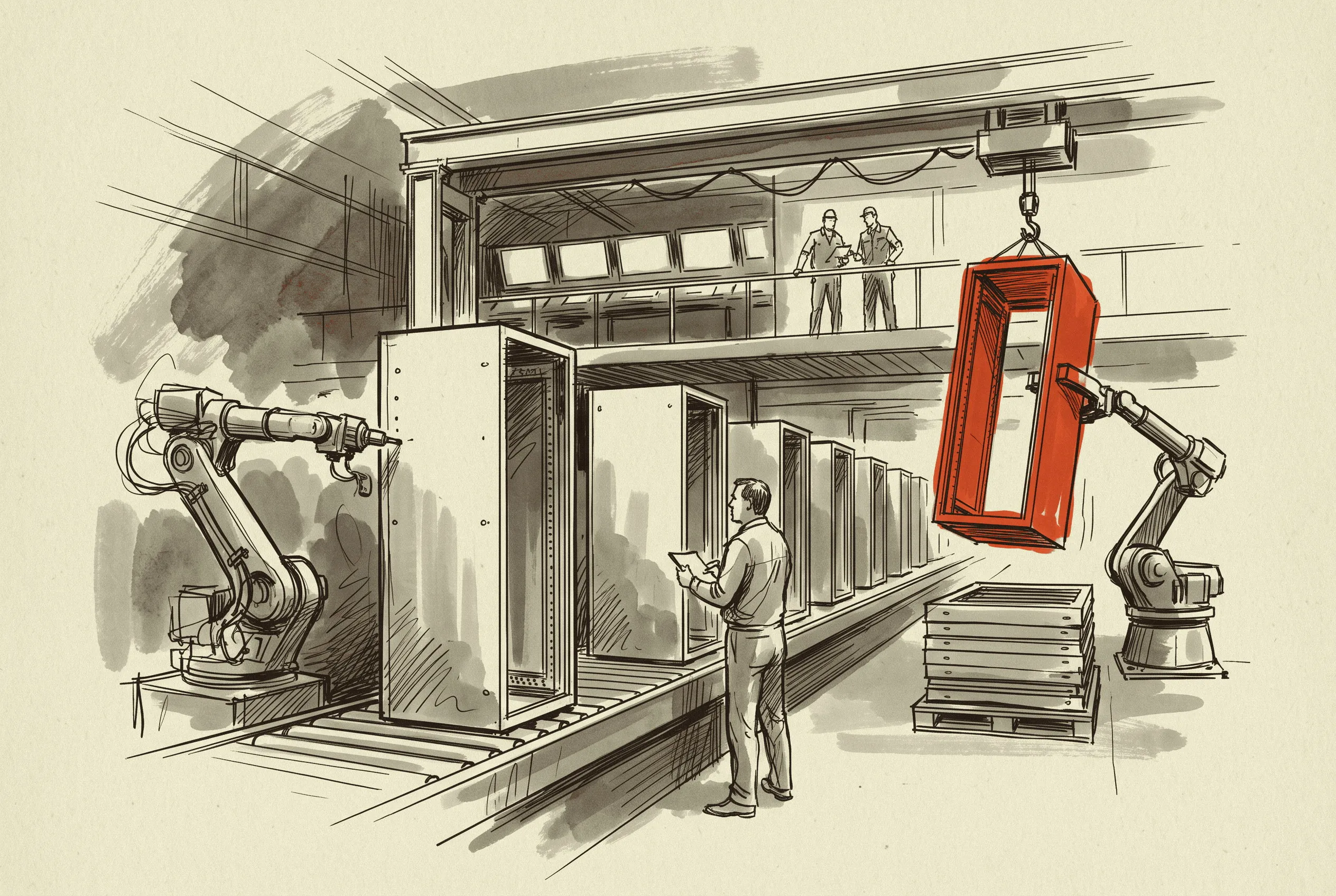
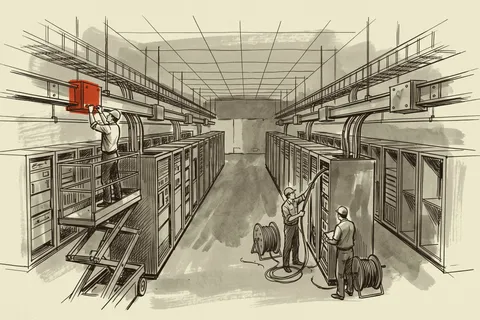
The first product is the one the datacenter boom cannot get enough of: custom rack enclosures for developers, neoclouds and chipmakers whose new silicon runs at different voltages and needs different cooling than the racks in the catalog. Winer frames the national case in numbers: China deploys more than 300,000 industrial robots a year, makes about a third of the world’s goods and has put more than $1 trillion into advanced manufacturing over a decade, while the United States holds about 75% of the world’s AI compute and is spending an estimated $7 trillion to build the datacenters that run it. The rack is where those two facts meet. We showed in the 800 VDC piece how a voltage change strands a white-space frame agreement, and a factory that can retool a rack design in software is the supplier that change creates. The MEP Cost Table gives the installed cost per rack position a colo buyer will compare the enclosure price against.
A buyer of rack enclosures in 2027 will have a US-built option designed for the new silicon, and the date to put in the calendar is the end of 2026. Foundational has not named a site or a customer, which is ordinary for a company nine weeks past its seed announcement, and the one question a purchasing team should hold ready is the delivery date of the first production enclosure. The datacenter electrical roadmap lists the rack and power-shelf transitions that Foundational’s first customers are buying for.
Hadrian: From 600,000 to 3 Million Square Feet in a Year
Chris Power founded Hadrian in Torrance, California, in 2021 to automate precision machining for aerospace and defense, and the company has grown by a factory a year since. Lux Capital and Andreessen Horowitz led a $90 million Series A in 2022. Founders Fund and Lux led a $260 million Series C in July 2025, with a factory-expansion loan arranged by Morgan Stanley, to build Factory 3 in Mesa, Arizona: 270,000 square feet, $200 million, 350 jobs, operational early 2026, plus a 400,000 square foot headquarters search. In January 2026 a round led by T. Rowe Price valued the company at $1.6 billion and the company launched Hadrian Additive, a division to industrialize metal printing for defense programs, and disclosed a $360 million revolving credit facility.
$90 million in 2022, $260 million in July 2025, $1.37 billion in August 2026. The Series D, announced 6 August 2026 at a $7.87 billion post-money valuation, had 1789 Capital, Morgan Stanley Wealth Management, Apollo funds, T. Rowe Price, CapitalG, Andreessen Horowitz, Founders Fund, Lux Capital, Altimeter and Construct Capital behind the five co-leads and JPMorgan. Power’s line in the release: “Production is now the frontline of deterrence. America’s ability to lead will depend on whether we can build, train, and scale faster.”
$1.6 billion in January, $7.87 billion in August, a 4.9x step in seven months, on a company whose footprint went from three plants and about 600,000 square feet in January to four plants and just under 3 million by August. The Book-to-Bill Table tracks the listed defense and electrical OEMs Hadrian sells into, and the pattern there, backlog growing faster than shipments, is the demand the valuation is pricing.
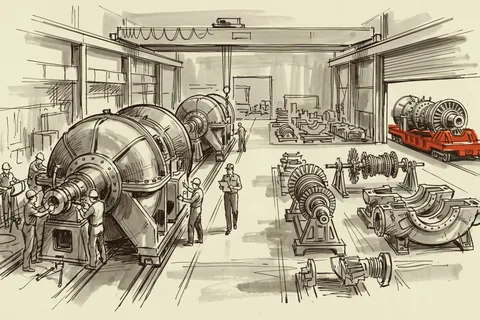
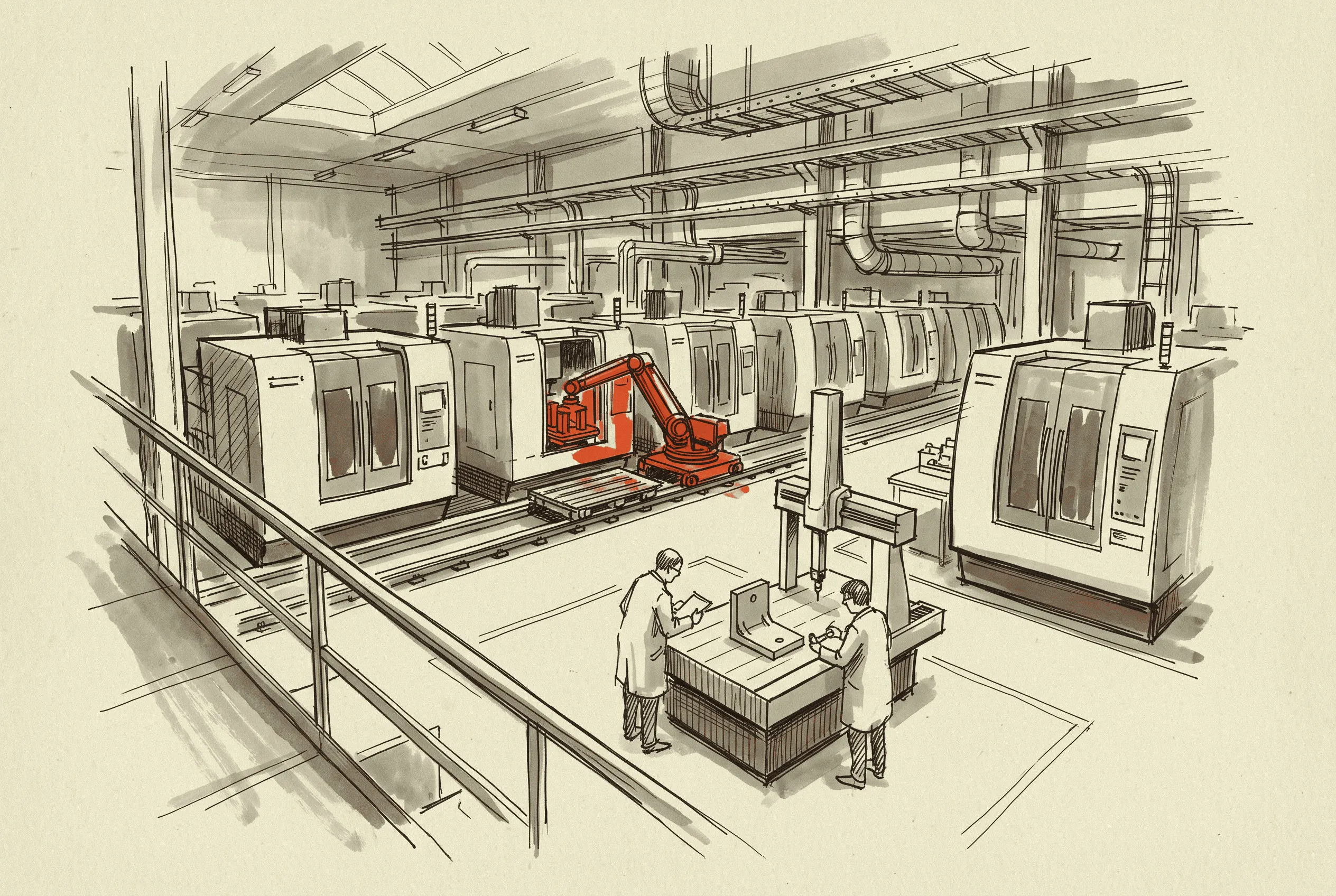
About 330,000 square feet across two Torrance sites (our subtraction of Mesa from the 600,000 three-site total), 270,000 in Mesa and 2.2 million in Cherokee, Alabama. Hadrian sells three ways: precision components from prototype to production, manufacturing as a service (dedicated cells at its plant or the customer’s), and factories as a service, the design and operation of a whole plant for a defense prime with a production problem. Its site says a technician with limited manufacturing experience reaches full productivity in 30 days or less, and every employee gets stock. Anduril is a named partner. On the OEM Disclosure Scorecard Hadrian is unusual among private companies for publishing square footage, headcount plans and wages plant by plant.
Cherokee, Alabama: 1,000 Jobs at $35.24 an Hour
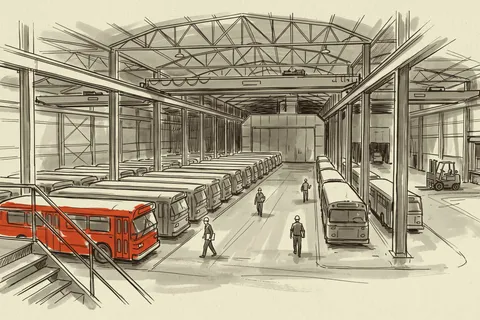
Factory 4 opened on 20 March 2026 at 1200 Haley Drive in Cherokee, Alabama, in the former FreightCar America railcar plant that closed in 2021, once the largest railcar factory in the country. It is 2.2 million square feet, dedicated to components for the Navy’s Columbia-class and Virginia-class submarine programs, and it is a $2.4 billion public-private partnership: $1.5 billion of Hadrian’s capital and $900 million in Navy appropriations. Secretary of the Navy John Phelan said at the opening that “private-sector partnership is not optional. It is foundational.” Power’s version was that industry “has to answer that call with real execution, and the window to do it is now.”
$1.5 billion private, $900 million public, full-rate production within 24 months of the March 2026 opening, which puts the date in the first quarter of 2028. The town of Cherokee has about 1,000 residents. The plant will employ more than 100 people by the end of 2026 and about 900 by the end of 2029, up to 1,000 at capacity, and the Shoals Economic Development Authority’s estimate is 888 jobs at an average of $35.24 an hour. Hiring began in September 2026.
100 by December 2026, 900 by December 2029, 1,000 at full rate. At $35.24 an hour and 2,080 hours, a full staff is a wage bill of about $73 million a year in a county that lost its largest employer five years ago, and the 30-day training claim is what makes 1,000 hires in a town of 1,000 a plan rather than a hope. Datacenter construction is eating electricians in the metros. Hadrian’s answer is to train technicians where the electricians are not. A 2.2 million square foot plant also draws power on a scale the Large-Load Cost Table was built for, and the Interconnection Cost tool prices the utility side of a plant that size in a TVA territory.
What a Buyer Can Order, and When
Monday’s list is short and dated. From 1872, request a quote on one structural weldment you already buy, with the drawing, the AWS D1.1 procedure requirement and your current supplier’s quoted weeks written on the RFQ, and ask for the delivery date in writing. The plant is producing now, and a first order sized at one truckload teaches you what Factory OS does with a real drawing. Run the quote you get back through Quote Check beside the incumbent’s to see which line items the software removed.
From Foundational Industries, there is nothing to order yet, and that is a scheduling fact rather than a judgment: put the end of 2026 in the calendar, send the rack specification for your 2027 white-space build now so the emulated plant has your design when the real one opens, and price the enclosure against the MEP Cost Table per-rack-position figure when the quote arrives.
From Hadrian, if you are a prime or a Tier 1 with a machined-part backlog, the manufacturing-as-a-service model is the door: dedicated cells at Torrance or Mesa, or at your plant, with a 30-day-trained workforce. If you are a commercial shop, Hadrian is not your supplier, but it is hiring your machinists at $35.24 an hour with equity, and the Equipment Price Benchmark is where to log what that does to the quotes you get from the shops that remain. The RFQ template has the clauses for a first order with a new plant, and the liquidated damages piece explains what a date is worth when a supplier is new.
Behind the paywall: the order book for each of the three, the certification each has said it holds or is pursuing, the 24-month Cherokee ramp read against what the Navy’s two submarine programs need by year, and the five questions to ask before a first purchase order at a plant that is younger than its backlog. The Lead-Time Monitor will publish the first delivered lead times from all three as they become public.